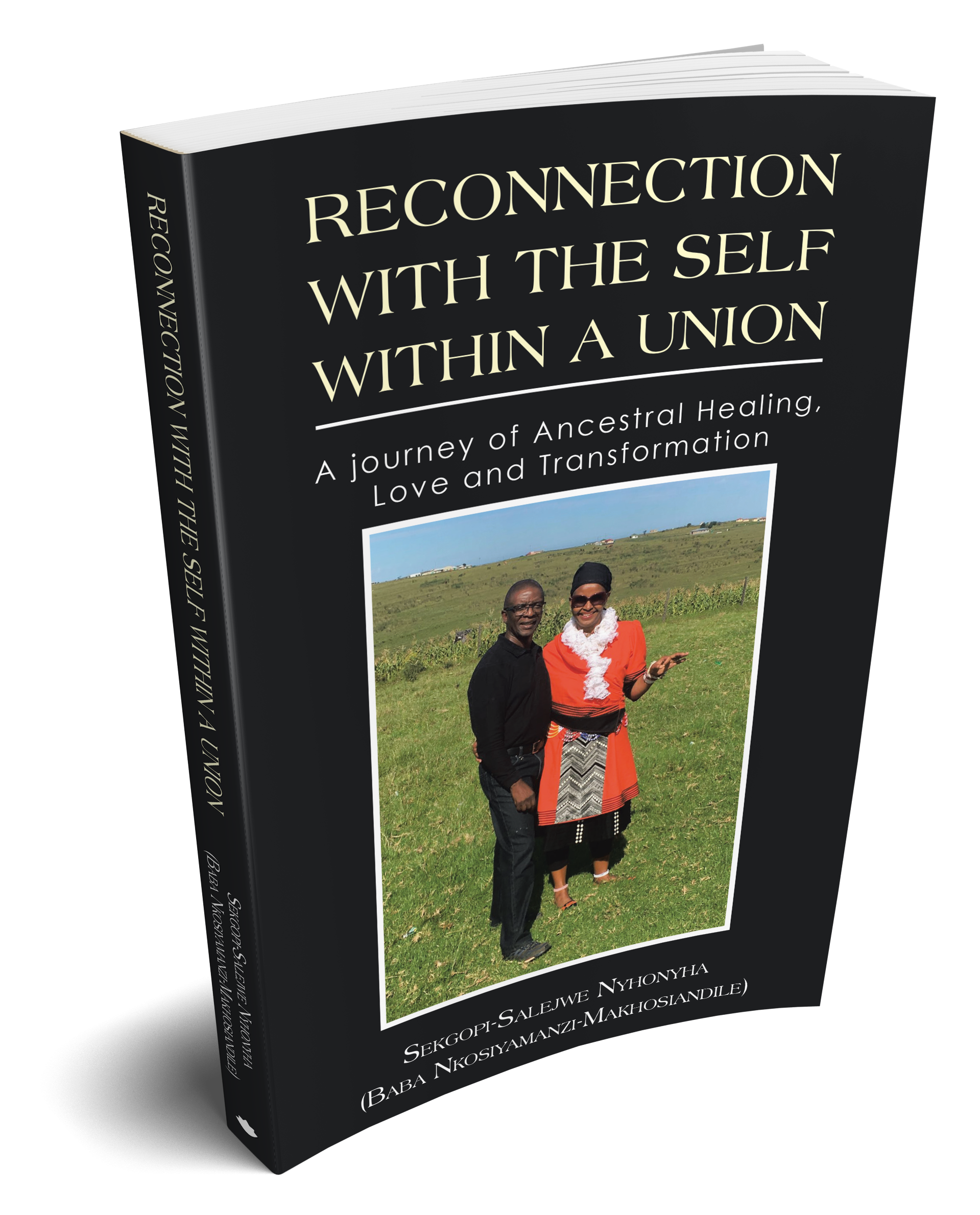
Reconnection With the Self Within a Union
Published by Balboa Press / Hay House | March 5, 2026 | 188 pages
“Reconnection With the Self Within a Union” is a deeply personal and practically grounded book about healing — not of a relationship in isolation, but of the self within one. Drawing on African ancestral wisdom, Ayurvedic philosophy, and the author’s own journey, it traces the path from fracture to wholeness: the moment the inner voice goes silent, the work of hearing it again, and the sacred possibilities that open when two people are each returned to themselves.Structured across five chapters — The Fracture and the Calling, Hear Your Voice, The Union of Two, Living from the Voice Within, and Spiritual Escape for Recharging — the book moves the reader from diagnosis to practice. It is written for anyone who has arrived at a point of disconnection and is ready to begin the journey back.
Publication Details
| Full Title |
| Author |
| Publisher |
| Publication Date |
| Pages |
| Dimensions |
| Softcover ISBN |
| Hardcover ISBN |
| eBook ISBN |
| Where to Buy |
| Reconnection With the Self Within a Union |
| Sekgopi-Salejwe Nolutho Nyhonyha |
| Balboa Press / Hay House |
| March 5, 2026 |
| 188 |
| 5.5 × 8.5 inches |
| 979-8-7652-1674-3 |
| 979-8-7652-1673-6 |
| 979-8-7652-1672-9 |
| Balboa Press | Amazon | Exclusive Books (SA) |
Suggested Interview Topics
The following five topics are offered as starting points for producers and editors. Each is a self-contained editorial angle that can be developed into a standalone interview, profile, or feature.
1. What Is Afrovedic Healing — and Why Does Africa Need It Now?
Sekgopi-Salejwe Nyhonyha occupies a rare space: the fusion of African ancestral healing traditions with Ayurvedic philosophy. In an era when wellness has been largely exported as a Western construct, she asks what happens when Africa’s own healing systems are placed at the centre. This conversation is as much about cultural reclamation as it is about personal well-being.
2. The Fracture in the Union — Why So Many Relationships Are Failing
The book opens with an unflinching diagnosis: that disconnection within intimate relationships often begins not with the other person, but with the silencing of the self. Drawing on two decades of healing practice, the author identifies the patterns she sees repeatedly — and offers a framework for returning to wholeness that does not require the dissolution of the union.
3. The Inner Voice — What It Is, How We Lose It, and How to Hear It Again
One of the book’s central ideas is the inner voice: the authentic self that knows, before the mind rationalises, what is true. The author speaks from lived experience as well as practice about how this voice is suppressed — by trauma, by social expectation, by the demands of family and faith — and what the journey of reclamation looks and feels like.
4. The Healer’s Own Healing — A Personal Story
The book is written not from a position of having all the answers, but from the position of someone who has walked the path. The author’s personal journey — as a healer, as a wife, as a woman navigating ancestral calling and modern life — is woven through the text. This angle invites the deeply personal interview that audiences respond to most powerfully.
5. Spirituality, Relationships, and the African Woman — Reclaiming the Narrative
What does it mean for an African woman, rooted in ancestral tradition and spiritual calling, to write publicly about the interior life of her marriage and her healing? This conversation sits at the intersection of gender, culture, spirituality, and courage — and opens a discussion that is rarely held with this level of candour in South African public life.
Reader Responses
The following responses have been received from early readers of the manuscript. They are reproduced here as submitted.
| “This book found me at exactly the right moment. I have been feeling lost inside my marriage for years, unable to name what was wrong. Sekgopi-Salejwe gave me the language, and more than that, she gave me permission to begin again.” — Early reader, Johannesburg |
| “What moves me most about this work is that it does not ask you to leave, or to stay, or to do anything other than listen to yourself. In thirty years of reading, I have not encountered a book about relationships that begins in this place. It is a gift.” — Early reader |
| “As someone trained in traditional healing, I have waited a long time for a book that speaks from inside our traditions without apology or translation. This is that book.” — Healer and wellness practitioner, South Africa |
Foreword
| The book’s foreword is written by the author’s husband, who writes as a partner who has walked alongside her through much of what she describes. His voice adds a dimension rarely present in books of this kind: the witness account from within the union itself. It is a foreword of unusual honesty and grace. |
Media Contact
| Name |
| Organisation |
| Website |
| Social Media |