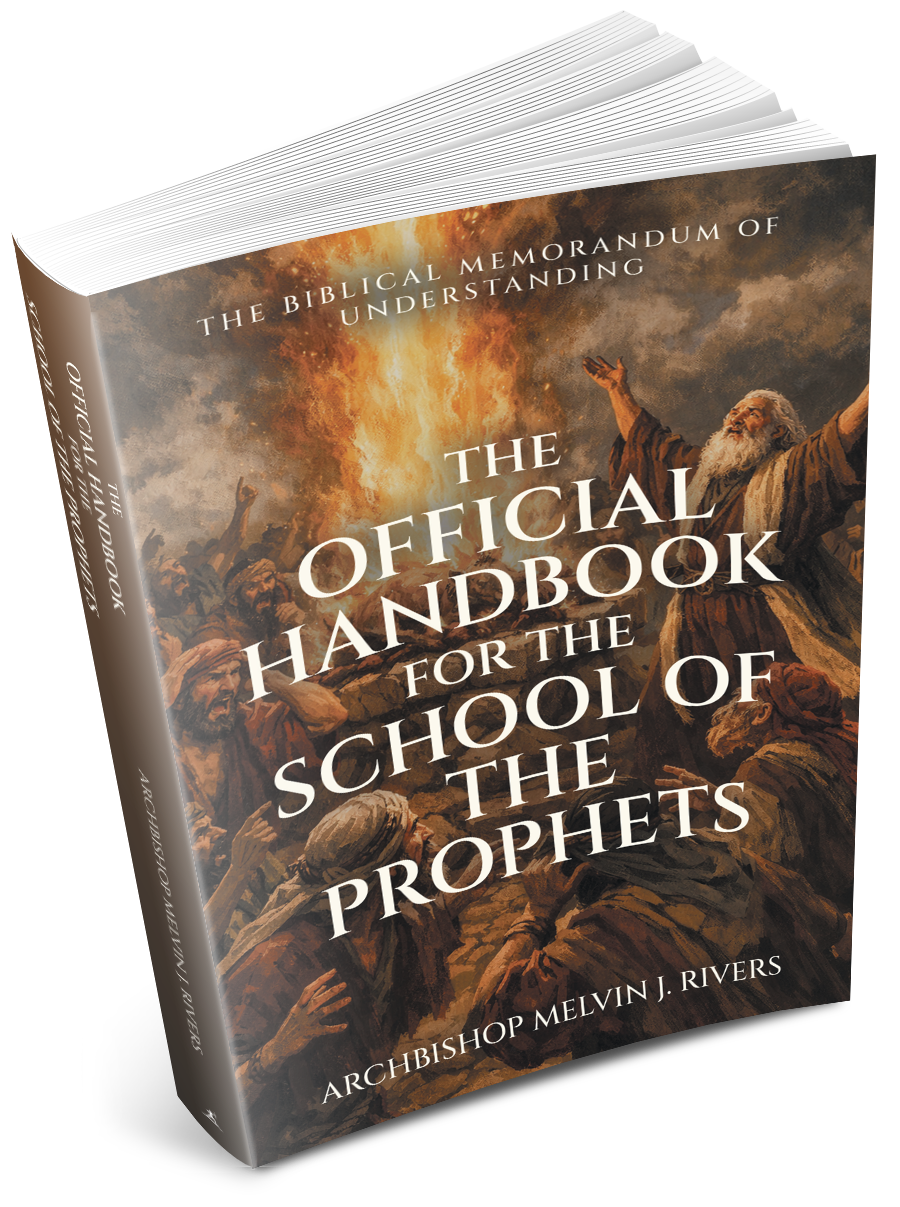
The Official Handbook for the School of the Prophets is a comprehensive Christian theological handbook focused on prophetic ministry, leadership, spiritual discernment, and church accountability. The book presents itself as both a training manual and a doctrinal framework for people involved in or studying prophetic ministry within Christianity.
The book is divided into major thematic sections, including:
- Foundations of Prophetic Ministry
Explains what prophets are, how prophetic ministry developed historically, and how prophecy functions biblically and theologically. It traces prophetic practices from ancient civilizations like Mesopotamia and Greece to Israelite prophecy and modern Pentecostal movements.
- Identity and Formation of the Prophet
Discusses how prophets are called, spiritually formed, educated, tested, and publicly recognized. It stresses that prophets should be “scholar-practitioners” who combine spiritual sensitivity with deep biblical study.
- Christological and Ethical Dimensions
Focuses on morality, accountability, pastoral care, and the idea that all prophecy should ultimately point to Jesus Christ. The author repeatedly warns against pride, manipulation, false revelations, and financial exploitation in ministry.
- Ecclesial Roles and Church Order
Explores how prophets should function within church leadership structures alongside pastors, apostles, evangelists, and teachers. It argues that prophecy must operate under discernment, order, and church oversight rather than independently.
- False Prophecy and Spiritual Abuse
A major section of the book examines false prophets, manipulation tactics, occult practices, “prosperity prophecy,” spiritual deception, and what the author sees as abuses in modern charismatic movements.
- Psychological and Theological Challenges
Covers emotional struggles, pride, jealousy, offense, and mental strongholds that can affect prophetic ministers. The author also discusses correction, mentorship, and personal discipline.
- Comparative and Historical Analysis
The book compares prophetic traditions across Christianity, Judaism, Islam, indigenous religions, and ancient pagan systems. It evaluates how different cultures historically determined prophetic legitimacy.
- Practical Frameworks and Reference Materials
Includes glossaries, analytical frameworks, ethical guidelines, and even a SWOT analysis of prophetic ministry.
Discern. Develop. Defend the prophetic call.