THE AUTHOR
I was a typical kid growing up in central Wisconsin in the late 1940s until one day, while playing in the field with my brothers, I realized I couldn’t see the house. Detached retinas in both eyes led to subsequent surgeries and total blindness by the time I was six years old. It wasn’t until many years later that Stickler Syndrome was recognized as a genetic abnormality of the connective tissues, which I inherited from my father, who had been blind since he was a teenager. Special education in public schools for blind children was rare in those days, and I spent the next 13 years at the residential school for the blind and visually impaired in Janesville, Wisconsin, going home only for Thanksgiving, Christmas, Easter and summer vacation.
When I was in high school my plan for the future was to be involved in anything to do with sports–coaching, managing, announcing—none of which realistically would be easy for a totally blind guy whose main experience in sports was wrestling and listening to Green Bay Packers football on the radio. When reality began to seep in during my undergrad years at University of Wisconsin-Stevens Point, I was lucky enough to be given the opportunity to teach Braille, daily living skills and woodworking to blind adults in a six-week summer school program for the Montana Association of the Blind at Montana State University. Teaching, which had never been at the top of the list of possible career choices, suddenly turned out to be the next 35 years of my life.
Whether it was teaching communications at an agency for the blind in Kalamazoo, covering a third of the state doing home teaching in Oregon, doing staff development in Indiana, or creating an undergraduate program to train rehabilitation teachers at Cleveland State University, the first half of my career also included working on two master’s degrees from Western Michigan University and a Ph.D. in Education Leadership from Case Western Reserve University. Armed with an overabundance of degrees, I turned my attention to administration and management. After a few years of frustration testifying to legislative budget committees, arbitrating personnel issues and battling internal (and external) politics, I returned to the world of teaching, ironically at the same school where I had spent my residential school years. Here I was teaching real, live children, where one can actually see progress being made day by day and enjoy a sense of accomplishment.
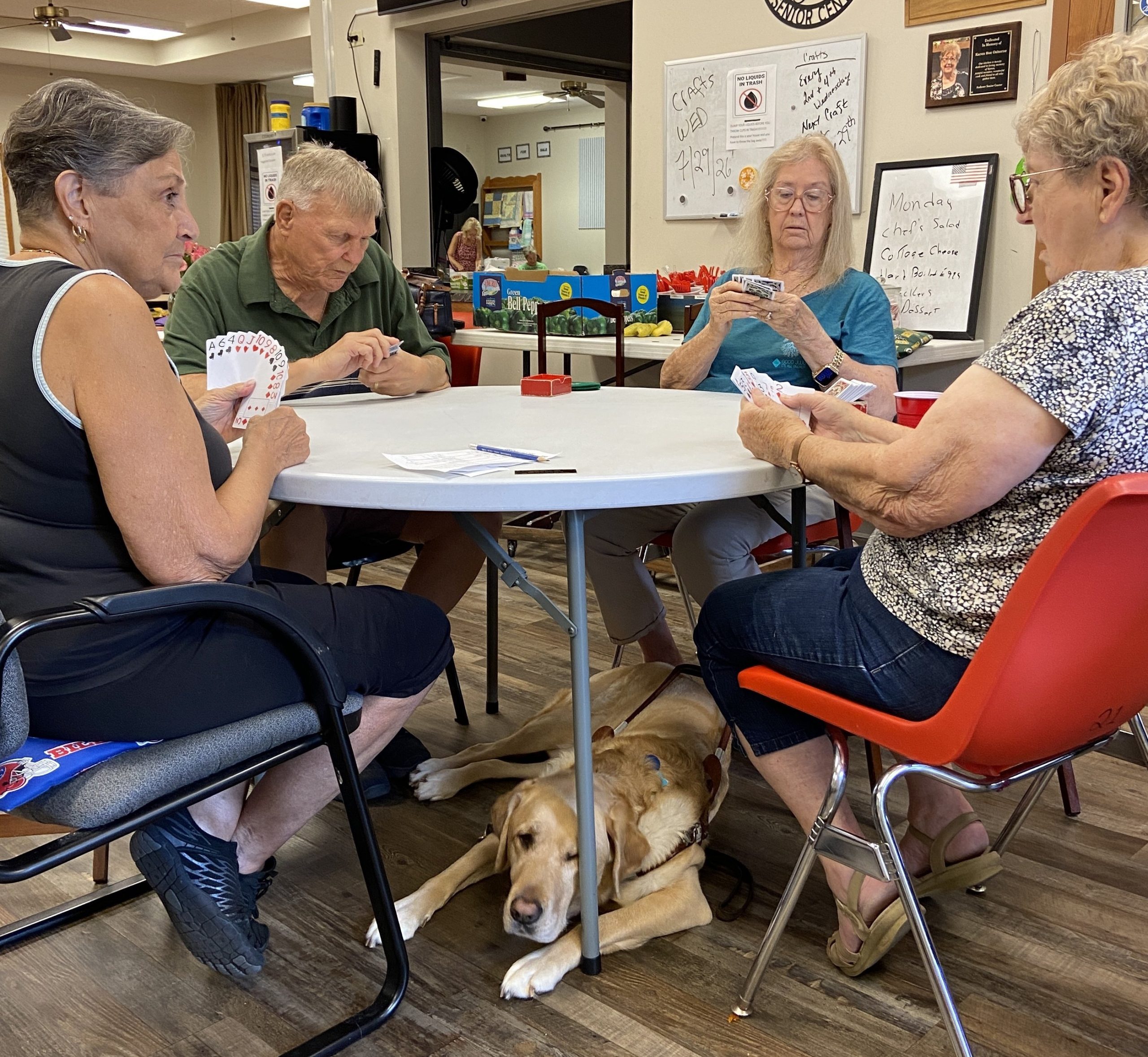
In 2003 my wife Sue and I retired to Harbor Cove, a 55+ adult living community in North Port, Florida. We spent winters in Florida and summers in an RV resort just north of Janesville. After 12 years of being snowbirds, we settled down full time in Florida. Our days were full of social and community activities. I played bridge and backgammon and enjoyed the perfect retirement life. Then one day I decided that maybe I would like to turn in my white cane and try using a guide dog. At Leader Dogs for the Blind I was paired with a Golden Retriever named Marco and my life changed forever. My wife used to tease me that it was supposed to have been her that I would brag about changing my life for the better, but since she was as affected as I by Marco’s addition to our home, we both knew that it was he who made our household complete. This is really his story.
